



DIY Guide: Installing and Fine-Tuning Your AVC Felt Wall Kit
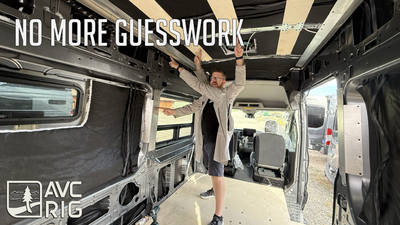
Hey everybody, Matt here for AVC! On today's project, we are installing and perfecting our AVC Felt Wall Kit on a Ford Transit High Roof 148 Extended van.

The AVC Felt Wall Kit panels are engineered out of 9mm thick PET (polyethylene) felt. It is 100% waterproof, incredibly lightweight, and provides excellent acoustic dampening to quiet down road noise inside your rig. Getting these panels to look completely factory-grade requires a solid infrastructure setup, a few smart installation tricks, and some quick fine-tuning.
Let’s get to work!
Part 1: Pre-Installation & Infrastructure

To ensure a successful installation, your van framework needs to be prepped with a few key foundational elements:
-
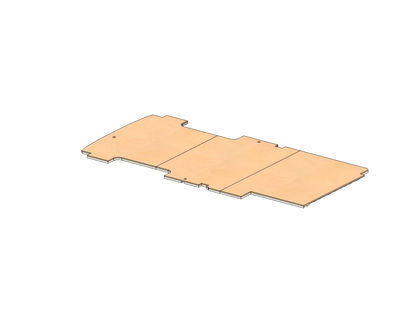
The Floor Reveal: Lay down your subfloor system and final flooring first. Let the flooring roll up the sides of the van slightly so that when the felt wall panels come down, they create a crisp, tight reveal with zero raw edges exposed.
-
The Wall Furring Kit: A straight van wall requires a solid skeleton. We pre-installed our modular structural supports, including the B-pillar, C-pillar, D-pillar, and a crucial C+ Pillar support—which provides a rigid anchor point to prevent panels from bowing across the massive side expanse of an extended Transit.
-
Wall-to-Ceiling & Ceiling Furring: These attach directly to the roof ribs to create a clean junction where the walls meet the ceiling, while comfortably clearing the main factory wiring harness.
-
Hardware Inserts & Wiring: Pre-install any 8mm rivnuts in the outer ceiling ribs for future overhead cabinets. On the front upper driver-side panel—which is made of hardened boron steel—insert 1/4-20 rivnuts into the existing factory holes. Do not attempt to drill or expand holes in boron steel; it is incredibly tough and will destroy standard drill bits. For your wiring, simply tuck the wire tails flat behind the panels for now; you can drop specific panels and cut precise pass-through holes later when mounting your utilities.
Part 2: Step-by-Step AVC Felt Wall Kit Installation
We always recommend starting with the lower wall panels because any minor rookie mistakes will be permanently hidden behind your future cabinetry, beds, or gear haulers.
Step 1: Hanging the Lower Panels

Position the lower panel against the furring kit. Don't jam it tight to the floor; lift it ever so slightly until it nestles naturally into the horizontal body panel seam.
To get a perfectly symmetrical, factory-grade line of screws across the entire van, use our custom, 3D-printable AVC Screw Guide (available as a free download on our website). Using 1-inch self-drilling screws, place the screw guide against the wall indexing points and drive them home.
Important: Do not overtighten the screws! If you drive them in too hard, the felt will crease and dimple. Tighten just until the screw head seats flush.
Step 2: Integrating Window Trim & Cubby Storage

Before hanging the middle row of felt panels, you need to install your window trim rings. For this build, we utilized premium trim components manufactured by our friends at Goat Components out of Indiana.
We installed their standard driver-side front quarter panel trim ring flush to the glass, and our collaborative Cubby Window Frame on the rear bunk window. The cubby frame adds two deep storage pockets right below the glass—perfect for holding your phone, a book, or window shades at night. To make the window frames blend seamlessly with the wall panels, map out your screw lines using a tape measure so they visually align with the horizontal lines of the neighboring wall panel fasteners.
Step 3: Mounting Upper Panels

Set the middle panels directly on top of your secured lower panels, sliding them tight against the window frames. Check that the horizontal center seam is perfectly tight and uniform, as this is the most visible seam in the entire van layout.
When you reach the front driver-side upper panel over the boron steel framework, put your self-drilling screws away and use 1/4-20 stainless steel sidewalk bolts (which feature a very wide, flat, shallow head) to secure it. You can take the pill-shaped felt pieces you popped out of the panel's utility windows, cut a shallow notch out of the back to clear the bolt head, and press them right back into the openings to completely hide your hardware.
Step 4: Finishing the Back Doors

For a clean, fully insulated look, we installed solid, full-door panels on the rear doors:
-
The Tape Hack: Because a solid panel completely hides the internal sheet metal structure, place small pieces of masking tape on the outer edge of the door frame in line with the internal flat metal spots before overlaying the panel. They act as a perfect drilling guide.
-
The Outer-Skin Danger Zone: When securing the upper corners of the rear doors, you must use a short 3/4-inch screw. The metal framing is incredibly thin at the top of the doors. If you use a standard 1-inch screw, you risk drilling straight through the outside skin of your van!
Part 3: Advanced Troubleshooting & Fine-Tuning
No custom DIY van build goes perfectly smoothly. Here are three practical troubleshooting techniques to handle common alignment and spacing challenges:
1. Fixing Lower Panel Gaps (The 3/16" Drill Bit Trick)

If you notice a slight, unsightly gap down at the very bottom of your wall panels, back the screws out and remove the panel. Grab a 3/16-inch drill bit and use it to slightly ovalize or "cut down" the existing screw holes in the felt panel itself. Re-mount the screw into the exact same hole in the van's metal framework and push the felt panel upward as you tighten it. The elongated hole allows the panel to shift up, instantly erasing the gap.
2. Shimming Out Wiring Bulges

As you move toward the rear of the van, you might hit a section where a thick factory wiring harness kicks your panel out. Since you can't make the harness any thinner, take some of the round "pill shape" felt scraps left over from your Unistrut cutouts, hit the back of them with a light coat of spray adhesive, and slide them about an inch inside the wall panel right next to the bulge. These scraps act as perfect, matching shims that naturally promote the panel to plane out evenly.
3. The Ultimate B-Pillar Flush Fix
On the front driver-side upper B-pillar, a massive factory foam block and wiring harness often push the upper panel out, creating a noticeable 1-inch offset where it meets the middle panel. If you aren't covering this with an overhead cabinet, you can build a custom furring shim:
-
Cut a piece of XPS (extruded polystyrene) foam to 2 inches tall by 24 inches long. Taper it smoothly from 7/8-inch thickness down to an absolute zero edge.
-
Apply a heavy layer of spray adhesive to the van's metal wall, but a very light coat on the XPS foam itself (heavy spray glue will dissolve foam).
-
Let the glue off-gas for a minute, press the foam wedge behind your aluminum B-pillar support track, wrap your finish fabric back over it, and re-mount the felt panels. The entire wall will now plane out flawlessly.
Wrap Up
Once your wall panels are fully secured, simply run your hand along the panel to locate the utility inserts. Press your utility knife gently into the felt, and the pre-scored plugs will pop right out, instantly giving you access to your 8mm inserts for mounting your Unistrut or overhead cabinetry.
Whether you're looking for our modern, acoustic-dampening PET Felt Wall Kits, or prefer a classic look with our Baltic Birch or Plywood Wall Kits, we have everything patterned out and ready to ship for your DIY build. Check out our online store to grab your kits and we'll catch you on the next one!
Shop the AVC felt wall kit for the Transit 148 EXT, the High Roof 148 felt wall kit and our van furring kits, or watch the full install on our YouTube channel.


